After eleven months of training, cross-border collaboration, and digital content production, the Institute for Media and Analytics IMA in partnership with NGO Esperanza World Culture Center finalized their regional digital campaign “Fighting Disinformation – Fighting for Democracy.” The initiative, supported by the Culture of Solidarity Fund powered by the European Cultural Foundation, mobilized young influencers from six Western Balkans countries to challenge the spread of disinformation and online hatred on social media.
This initiative began with a simple but ambitious idea: empower young people to speak up, disrupt harmful narratives, and make truth visible in digital spaces where manipulation often spreads faster than facts.
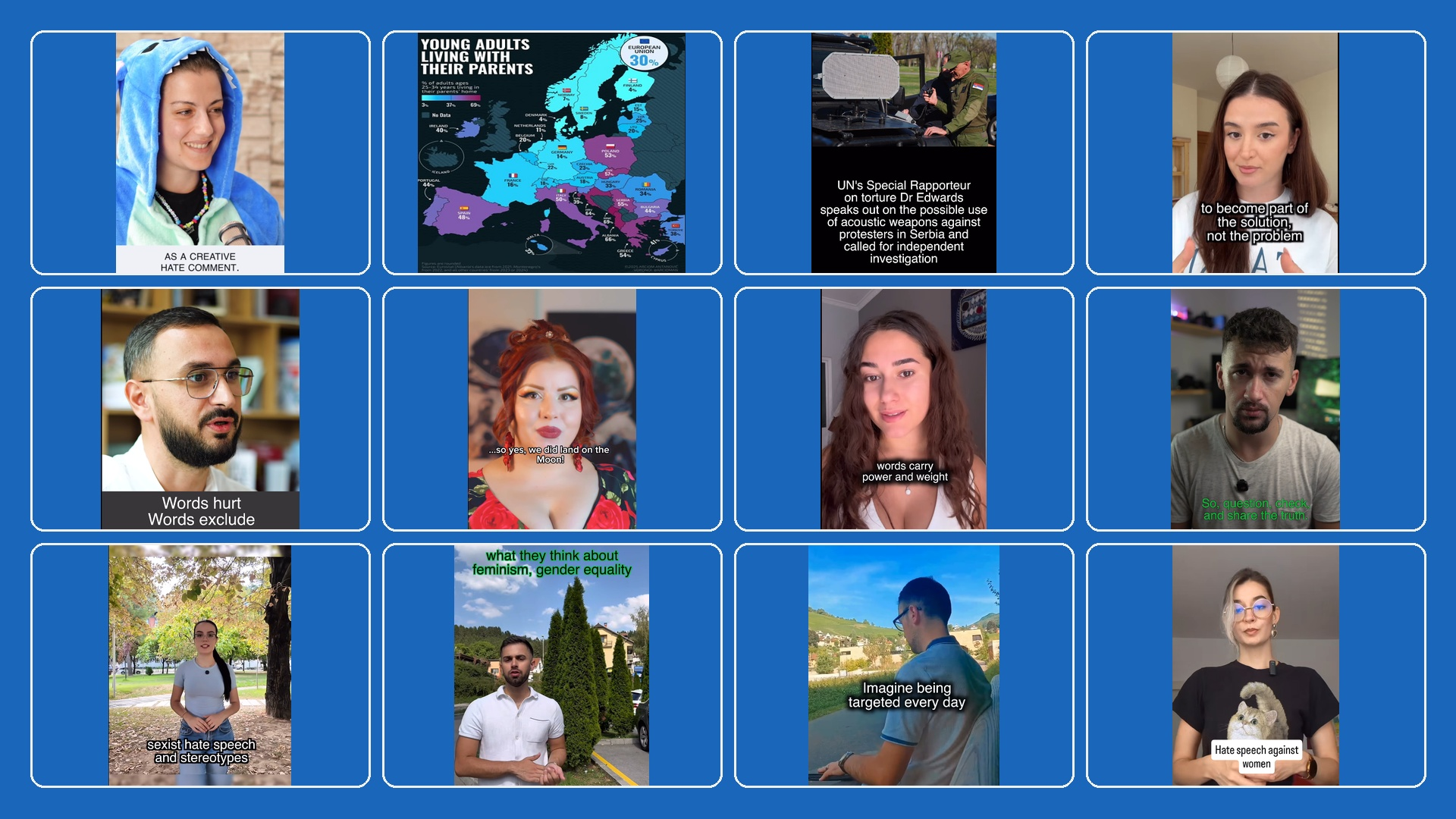
During the project, IMA provided mini-grants, mentorship, research support, and tailored training to twelve creators from North Macedonia, Serbia, Albania, Kosovo, Montenegro, and Bosnia and Herzegovina. Each influencer produced diverse content from series of videos, short educational formats, interviews, street polls, podcasts and storytelling reels — published on Instagram, TikTok, Facebook, YouTube and X, and reshared through IMA’s online platforms.
The content produced throughout the initiative now forms a powerful regional mosaic of personal stories, critical reflections, and civic courage for tackling disinformation and hate speech. The campaign showed that hate speech—online or in public spaces—shapes the next generation’s values and that words have real consequences, while empathy, solidarity, and small acts of kindness can counter manipulation and polarization. Creators reminded audiences that being informed is an act of freedom and that critical thinking protects democratic choice, highlighting how online division is often intentionally manufactured to sway public opinion.
Through personal storytelling and podcast conversations on identity, discrimination, and vulnerability, they demonstrated how openness can foster solidarity. They stressed that demanding transparency and accountability is not a political bias but a democratic right. By debunking conspiracy theories with evidence, they affirmed that curiosity and critical thinking are essential defenses against falsehoods. Discussions on equality underscored that social justice movements strengthen—not threaten—society, and every shared story, however small, contributes to democratic resilience.
Daniela Antičić — warns that hate speech—online or on our walls—shapes the next generation and urges us to use words that protect, not harm.
Fatlum Jashari — stresses that hate speech and disinformation harm individuals and communities, urging everyone to verify before sharing and stand up for the truth.
Edja Feçanji — argues that attacking or silencing women online harms democracy and that confronting disinformation, hate speech, and sexist stereotypes begins with respect.
Bakir Čustović — says disinformation in the Balkans is a political weapon that divides and controls, urging source-questioning and fact-checking to defend the region’s future.
Marko Vulević — insists that gender equality isn’t just a women’s issue and calls on men to be feminists because respect and equal opportunity benefit everyone.
Irisa Nazari — underscores that free expression is vital but words have weight, so online we must know the line between free speech and harm and choose our words with care.
Martina Dimoska — shows that conspiracy theories spread faster than facts and, by debunking Moon-landing myths, demonstrates how facts, evidence, and critical thinking push back.
Shkodran Hoti — highlights discrimination against Roma, Ashkali, and Egyptian communities and urges respectful language that recognizes their contributions and builds a society where everyone is valued equally.
Xhesjana Brahimi — reminds us that false information spreads fast, but each of us can stop it by checking the source before we share and choosing to be part of the solution.
Nemanja Živić — raises concern that peaceful protests in Serbia were met with tactics that violate human rights, stressing the need for accountability, transparency, and the right to protest without fear.
Izabela Jakimova — argues there’s no such thing as a “creative hate comment”—even when masked as humor it harms real people—and urges for empathy and mindful speech to build a healthier online space.
Valentina Ostojić — explains that 69% of Montenegrins aged 24–34 living with parents reflects systemic economic hardship and housing inequality, making independence a privilege, not a choice.
Collectively, their voices reached tens of thousands of young people across the region. More importantly, they reshaped online conversations. Instead of reacting to hate, they generated new narratives rooted in truth, empathy, evidence and shared democratic values.
The initiative demonstrates that disinformation in the Western Balkans is not only politically motivated; it affects identity, mental health, and social cohesion. By placing young creators at the center, the project transforms passive social media consumption into active citizenship.
“Fighting Disinformation – Fighting for Democracy” reinforces IMA’s mission to bridge research, media literacy, multimedia storytelling and youth empowerment in order to stand against manipulation and build digital spaces where dialogue replaces hostility.
—
This project was made possible thanks to the financial support of the Culture of Solidarity Fund powered by the European Cultural Foundation